

Accepting New Patients

So you’re researching “do toddlers need X-rays?” Maybe someone mentioned it at your dental visit, or your mom friend said something about her dentist wanting x-rays for her four-year-old. Now you’re wondering if your little one really needs them?
You’re asking great questions, and we get these questions all the time. Dr. Ray Klein and Dr. Hayley Botwin believe in educating parents about when X-rays are needed and when they’re not.

Every toddler is unique, so the American Academy of Pediatric Dentistry does not have a specific age recommendation for pediatric X-rays. However, most children have their first X-rays by age 5 or earlier, depending on their needs. We want you to know this. Almost 90% of the cavities we find are located in between the teeth where you can’t see them. Or at least you can’t see them until they get big, which is never a good thing.
At our office, our pediatric dentists try our best to prepare you and your child for their first set of X-rays. We’ll tell you the benefits and what we’re hoping to learn. You’ll have time to ask questions. We want you to understand the benefits. Ultimately, we’re both in this to give your child the best care possible.

When X-rays are taken, we use the latest digital technology that produces incredibly low levels of radiation. Digital X-rays emit significantly less radiation than traditional film X-rays, and we’re talking about amounts that are really, really small.
But here’s what’s great about our digital system: we see the images right away on the computer screen. No waiting around, and the pictures are sharper than film X-rays.
We use child-sized lead aprons for extra protection. We genuinely want to minimize any exposure, even though the levels are already extremely low. We follow something called “as low as reasonably achievable,” which means we only take the specific X-rays we absolutely need with the lowest settings that still give us clear images.
The American Academy of Pediatric Dentistry publishes guidance on the appropriate use of dental radiographs in children.
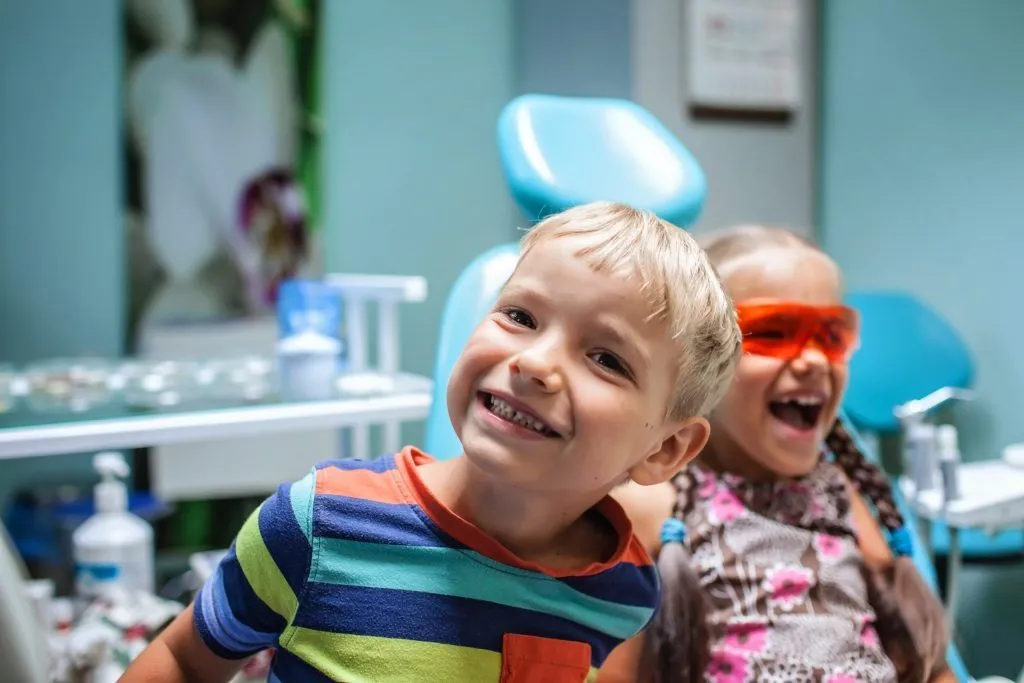
When X-rays are needed for your child, we make the process as easy as possible. No more biting on the hard paper films you may remember from your childhood. Parents are always surprised at how easy it is, even for the little ones. Like everything in our office, we have equipment sized just for kids. Most children think it’s pretty cool to see pictures of their teeth on the computer screen afterward.
The actual X-ray takes seconds per image. We’ll explain to your child that we’re taking pictures of their teeth, which they usually find interesting rather than scary. Some kids want to count their teeth on the screen, others just want to know when they get their toy for being such a good patient.
We try our best to make the X-ray experience an enjoyable one. If your toddler is having a rough day, sometimes waiting a few months makes all the difference in their ability to cooperate. We’re building a relationship with your child that’s going to last years, so one appointment isn’t make-or-break.
Always remember that kids do best when their parents stay calm and positive. If you’re stressed about it, they pick up on that energy. If you’re matter-of-fact and curious about seeing the pictures, they often are too.

Every child is different, and what makes sense for one kid might be completely unnecessary for another. We base our recommendations on your child, their specific cavity risk and what we can and cannot see during the regular exam.

Parents want to know if refusing X-rays means their insurance won’t cover other treatments. That’s not how it works. We document our clinical reasoning for any recommendations, and insurance companies understand that not every child needs every procedure.
Others ask if we can just sedate their child for X-rays. We don’t recommend sedation just for diagnostic X-rays in young children. The risks of sedation far outweigh the benefits of getting those images in most cases. If your child needs sedation for treatment later on, we can get any necessary X-rays then.
Parents often ask how frequently their child may need X-rays. Again, this is individualized and depends on many factors, including your child’s cavity risk. We do our best to keep everyone informed when X-rays may be indicated to best manage your child’s oral health.
Digital X-rays produce a fraction of the radiation of traditional film X-rays, which is already an extremely small amount. We also use child-sized lead aprons and only take the specific images we need.
Each image takes just a few seconds. We use child-sized sensors and explain it as taking pictures of their teeth, which most kids find interesting. If your child is having a tough day, we can wait because we’re building a long relationship, not rushing.
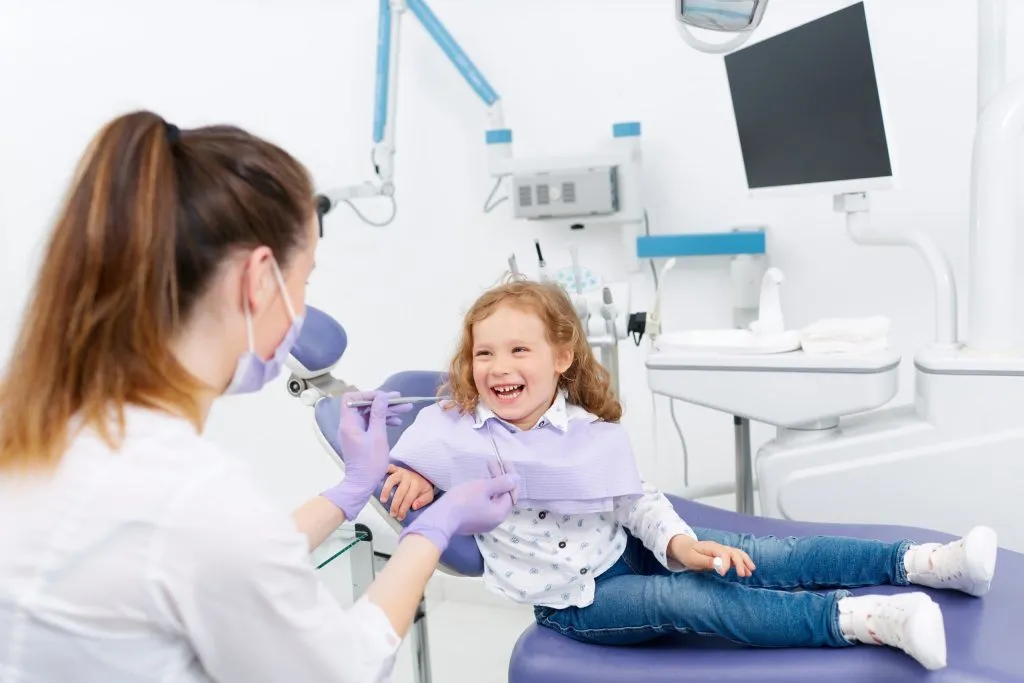
We know that researching dental procedures for your child can bring up a lot of questions and concerns. That’s exactly why we believe in having real conversations with parents.
Dr. Ray Klein and Dr. Hayley Botwin want you to feel confident about every decision you make for your child’s dental care. We’ve been doing this long enough to know that every family is different, and what works for one kid might not be right for another. That’s why we take time to explain our thinking and listen to your concerns, because ultimately, you know your child better than anyone.
We’re in-network with most PPO plans, and our philosophy is simple: we only recommend what we’d want for our own kids and family. If you’re wondering whether your child might need X-rays or you just want to meet us and see what we’re all about, give us a call at (310) 329-9009 or contact us online to set up a time to chat.
Mon-Fri: 9am – 5pm
We use cookies to improve your experience on our site. By using our site, you consent to cookies.
Manage your cookie preferences below:
Essential cookies enable basic functions and are necessary for the proper function of the website.
CloudFlare provides web performance and security solutions, enhancing site speed and protecting against threats.
Service URL: developers.cloudflare.com (opens in a new window)
These cookies are needed for adding comments on this website.
Google reCAPTCHA helps protect websites from spam and abuse by verifying user interactions through challenges.
Google Tag Manager simplifies the management of marketing tags on your website without code changes.
Statistics cookies collect information anonymously. This information helps us understand how visitors use our website.
Google Analytics is a powerful tool that tracks and analyzes website traffic for informed marketing decisions.
Service URL: policies.google.com (opens in a new window)
Marketing cookies are used to follow visitors to websites. The intention is to show ads that are relevant and engaging to the individual user.
Facebook Pixel is a web analytics service that tracks and reports website traffic.
Service URL: www.facebook.com (opens in a new window)
Google Maps is a web mapping service providing satellite imagery, real-time navigation, and location-based information.
Service URL: policies.google.com (opens in a new window)