Is Juice Really That Bad for My Kid’s Teeth?
Is the apple juice at breakfast really such a big deal? Should you be watering it down? Is this the thing that is going to lead to a mouthful of cavities before kindergarten? A quick search online turns up ten different answers, and half of them contradict the other half.
What Juice Actually Does to Baby Teeth
Juice isn’t automatically off-limits, but how often and how long your child’s teeth are exposed to it makes a big difference. The natural and added sugars in juice can be used by bacteria in the mouth to produce acids that weaken tooth enamel. The more frequently teeth are exposed to those sugars throughout the day, the greater the opportunity for cavities to develop. A glass of juice finished in five minutes at breakfast creates one acid attack. The same amount of juice sipped slowly over an hour in the car, or carried around in a cup all afternoon, creates a much longer attack on your child’s teeth.
That is really the heart of the issue. It is less about whether juice is allowed at all and more about how long it sits on the teeth before your child brushes or rinses with water.
How Much Juice Is Actually Fine
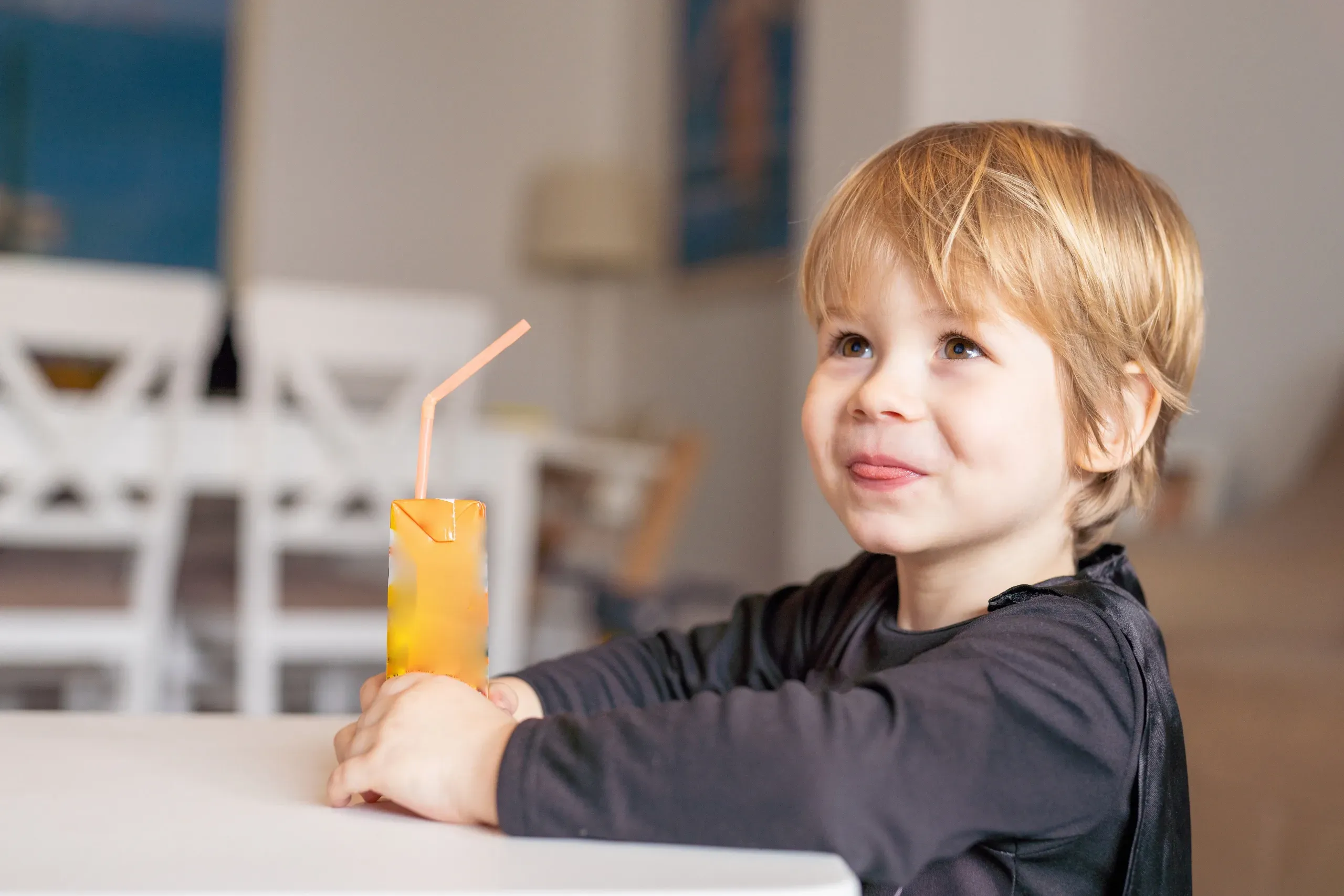
The American Academy of Pediatric Dentistry recommends no more than 4 ounces of 100 percent fruit juice a day for children between the ages of 1 and 3, and no juice at all for babies under 1. That is a small amount, closer to half a juice box than a full cup.
Does 100 Percent Juice Change Anything?
Not as much as the label suggests. One hundred percent juice does skip the added sugars and artificial flavoring found in fruit drinks, punches, and sodas, so it is a reasonable choice from a broader nutrition standpoint. From a tooth’s perspective, though, sugar is sugar, and the natural sugars in juice interact with plaque the same way added sugars do. This is part of why frequent snacking throughout the day comes up so often in conversations about toddler teeth, since constant grazing or sipping keeps teeth sitting in an acidic environment for longer stretches.
Why Baby Teeth Still Matter
It is easy to assume that cavities in baby teeth are not a big deal since those teeth eventually fall out anyway. In reality, decay in primary teeth can affect the permanent teeth developing underneath them, and untreated cavities can lead to pain, infection, or the need for more involved treatment later on. Keeping an eye on how juice and other sugary drinks fit into your child’s day is one piece of that picture.
Silicon Beach Pediatric Dental Is Here for Questions Like This One
Every family’s routine looks a little different, and Dr. Ray and Dr. Hayley are not interested in handing out a one-size-fits-all list of rules. What works for one household’s juice habits might not fit another, and that is fine. What matters more is having a dentist who actually looks at your child’s teeth and habits and tells you plainly what needs attention and what does not.
If you have questions about juice, snacks, or anything else going on in your toddler’s mouth, we would rather you ask us directly than spend another night searching for answers online. You can reach out through our contact page to set up a visit or ask us at your child’s next recall appointment.

Medically Reviewed
This article has been reviewed for accuracy by Dr. Ray Klein, DDS, a board-certified pediatric dentist who completed specialized training at USC and Miller Children’s Hospital in Long Beach. Dr. Ray focuses on prevention-based care and helping families establish healthy dental habits from their child’s first visit. The information provided reflects current evidence-based practices in pediatric dentistry.